Well Pump Repair & Replacement in Bloomington, IN
Dry faucets, sputtering taps or a pump that never shuts off? Reach a pump installer serving Monroe County.
Call (317) 798-0634Get a Free Well Quote
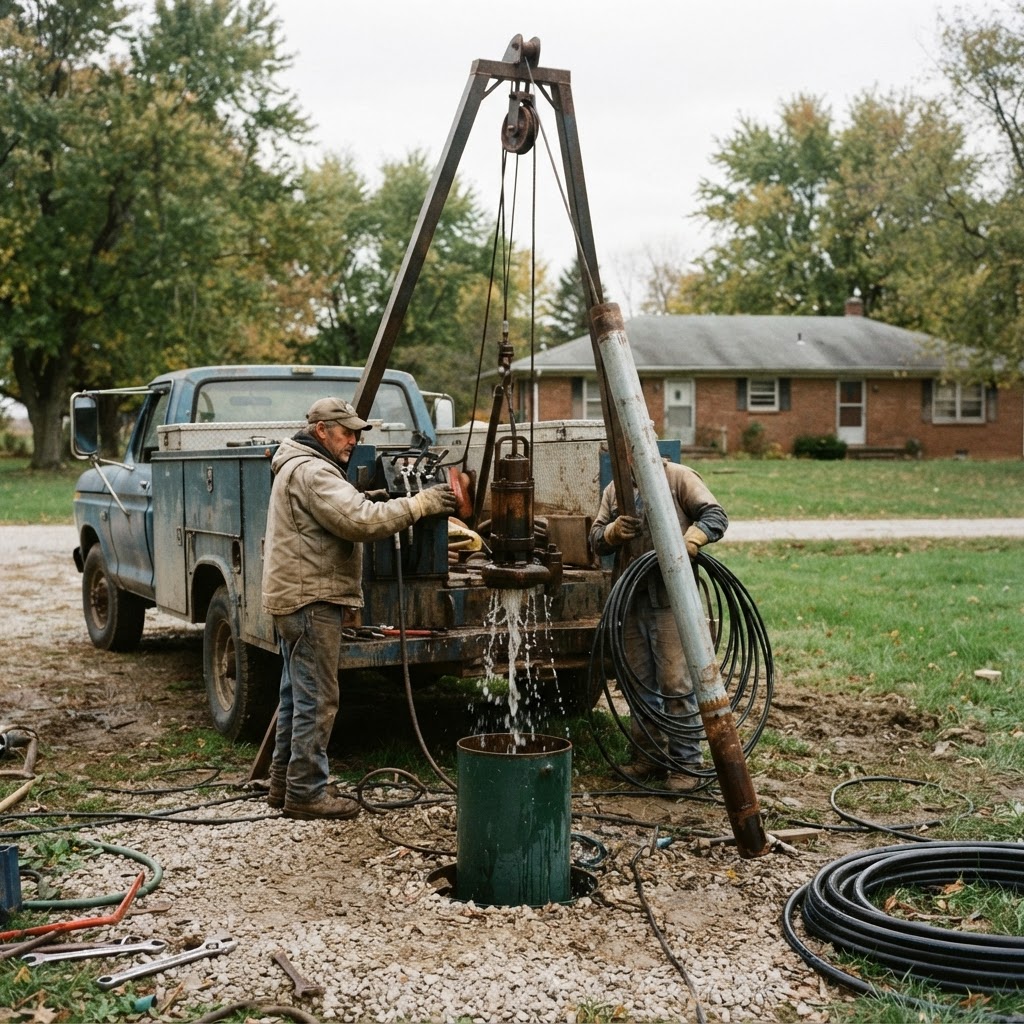
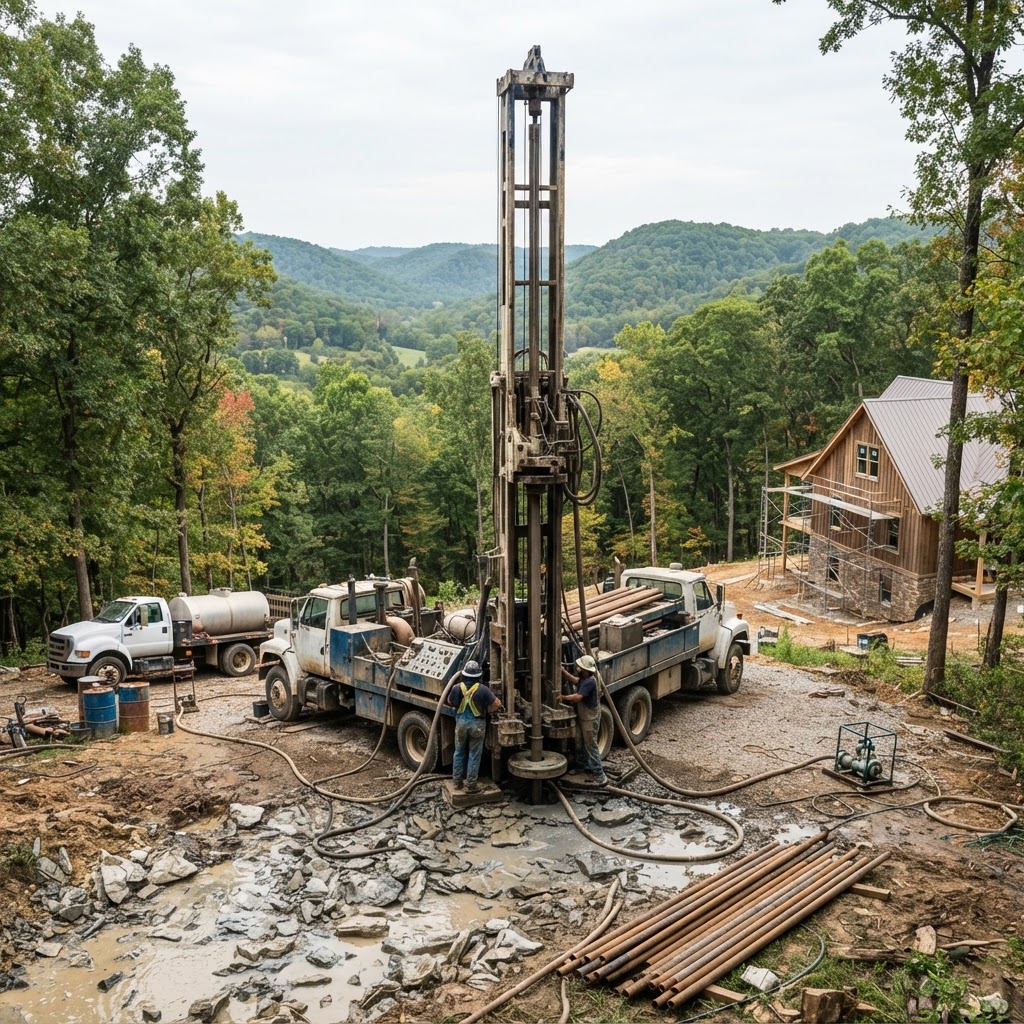
When a well pump stops, the whole house stops: no showers, no toilets, no dishes. If you're out of water now, call (317) 798-0634 and say so, or pick "No water or low pressure (urgent)" on the form. We pass it to an independent well and pump contractor serving the Bloomington area, and they contact you directly.
Common Well Problems We Hear About
No water at all
The usual suspects are the pump itself, the pressure switch, a tripped breaker or blown control box part, a broken wire or pipe in the well, or a water level that has dropped below the pump. A pump installer can test the electrical side at the surface before deciding whether the pump has to come out of the well.
Low or falling pressure
A weak pump, a clogged filter or sediment, a failing pressure switch, a leak in the line to the house, or a waterlogged pressure tank can all cause it. If pressure drops mostly during heavy use, mention that.
Pump short cycling (clicking on and off)
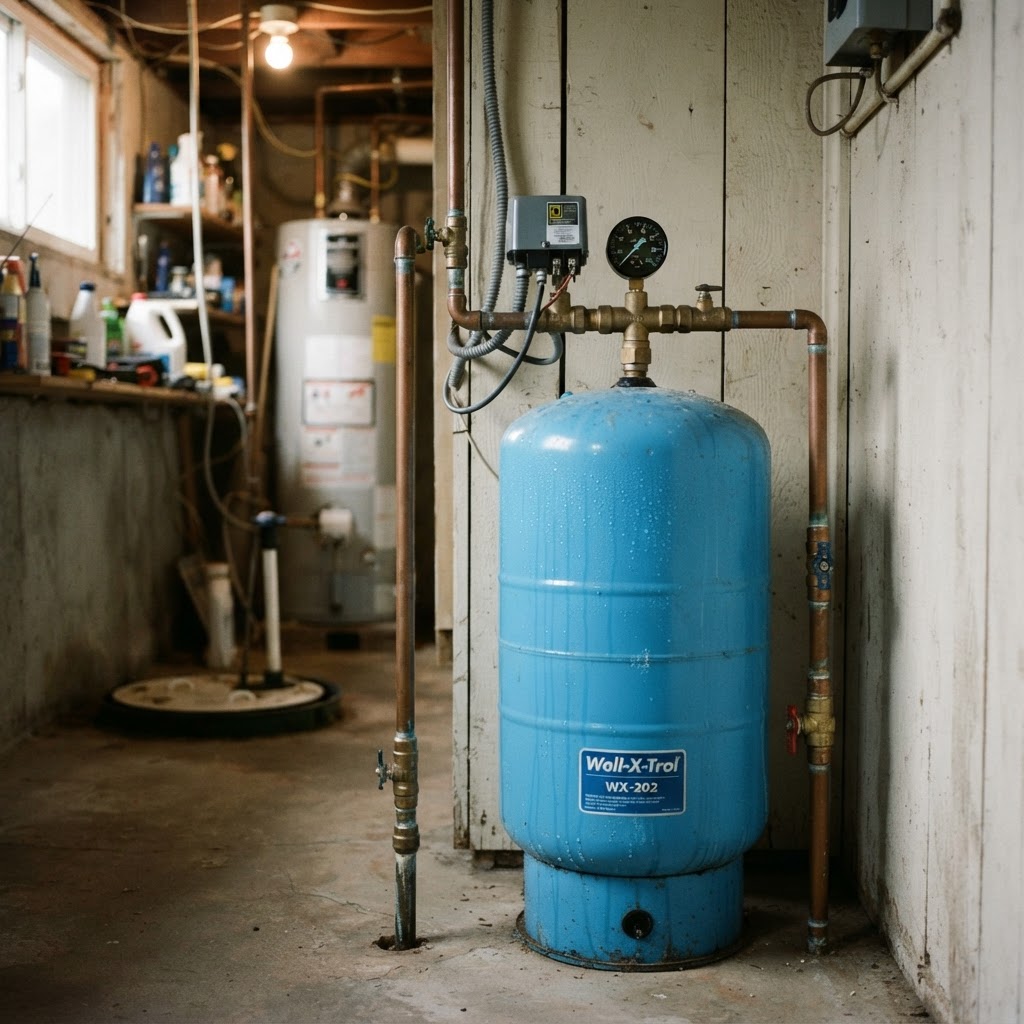
Rapid on-off cycling is often a pressure tank that has lost its air charge or has a failed bladder, or a pressure switch that's out of adjustment. It's worth fixing quickly, because constant starting is hard on a pump motor.
Pump runs and won't shut off
That can mean a leak somewhere in the system, a pressure switch problem, a worn pump that can't reach cut-off pressure, or a water level problem in the well.
Air, sputtering or dirty water
Air spitting from faucets, sand, silt or sudden cloudiness can point to a pump set too close to the water level, a damaged drop pipe, a casing problem or changes in the well itself. Sudden changes in taste, odor or clarity are also a good reason to have the water tested.
High electric bill
A pump that runs far more than it used to is often a sign of a leak, a tank problem or a worn pump.
Repair or Replace?
Not every no-water call means a new pump. A pump installer will usually check, in roughly this order:
- Power: breaker, wiring, control box (for some pumps) and pressure switch.
- Pressure tank: air charge and bladder condition.
- Water in the well: whether the level has dropped.
- The pump: amp draw and resistance readings, and then pulling it if needed.
If the pump is old or the motor has failed, replacement is often the practical choice. HomeGuide puts typical well pump lifespans in the range of about 8 to 15 years, so the age of your pump is useful information. Ask the contractor to explain what failed and show you the readings or parts.
Types of Well Pumps
- Submersible pumps sit down in the well and are the most common type for deeper drilled wells.
- Jet pumps sit above ground and are generally used on shallower wells.
- Constant pressure systems use a variable-speed drive to keep pressure steady as demand changes.
- Hand pumps can be added as a backup on some wells.
Indiana's rule 312 IAC 13, as summarized by IDNR, says submersible pumps must be set deep enough to allow for drawdown and seasonal water level changes. That's one reason a replacement isn't always a straight swap.
Pressure Tanks and Switches
The pressure tank stores water under pressure so the pump doesn't start every time you open a faucet. Tanks wear out, lose their air charge or develop failed bladders. A pressure switch tells the pump when to start and stop. Both are common, usually less expensive fixes than a pump. Note: IDNR says Indiana's well drilling rules don't regulate in-house equipment like pressure tanks, but you still want someone who knows well systems.
Other Well Repair and Service
- Well caps: cracked, missing or non-sealing caps let insects, small animals and surface water in. A sanitary, vented cap is a cheap fix.
- Casing problems: a damaged or buried casing can let surface water in. Indiana's standards call for the casing to extend at least a foot above ground.
- Shock chlorination after repairs or a positive bacteria test. Retest afterward to confirm the result.
- Low-yield wells: some contractors offer well cleaning or rehabilitation, or may recommend deepening or a new well.
- Yard hydrants and water lines between the well and buildings.
What It Might Cost
HomeGuide's national guide lists about $1,000 to $2,500 installed for a typical submersible pump replacement, roughly $400 to $1,400 for jet pumps, and $2,000 to $5,000 for constant pressure systems. Its well drilling guide lists pressure tanks at about $800 to $1,500. These are national figures and vary with well depth, pump size, wiring, pipe and access. Repairs like a pressure switch or tank recharge usually cost less than a pump. See our cost guide for more, and get a quote on site.
While You Wait
- Turn off the pump breaker if the pump is running nonstop with no water, to avoid running it dry.
- Write down what you noticed: when it started, the pressure gauge reading, any storm or outage.
- Have the location of the well cap and pressure tank ready, and clear a path for the service truck if you can.
- For drinking water, use bottled water until the system is fixed and, if the well was opened, until it's disinfected and tested.
Frequently Asked Questions
No water or losing pressure? Call (317) 798-0634 now, or send the form and say it's urgent.
Related: Home · Water Well Drilling · Inspection & Testing · Cost Guide